
How to Get ER Medical Records After a Car Crash
AtlasServe Legal
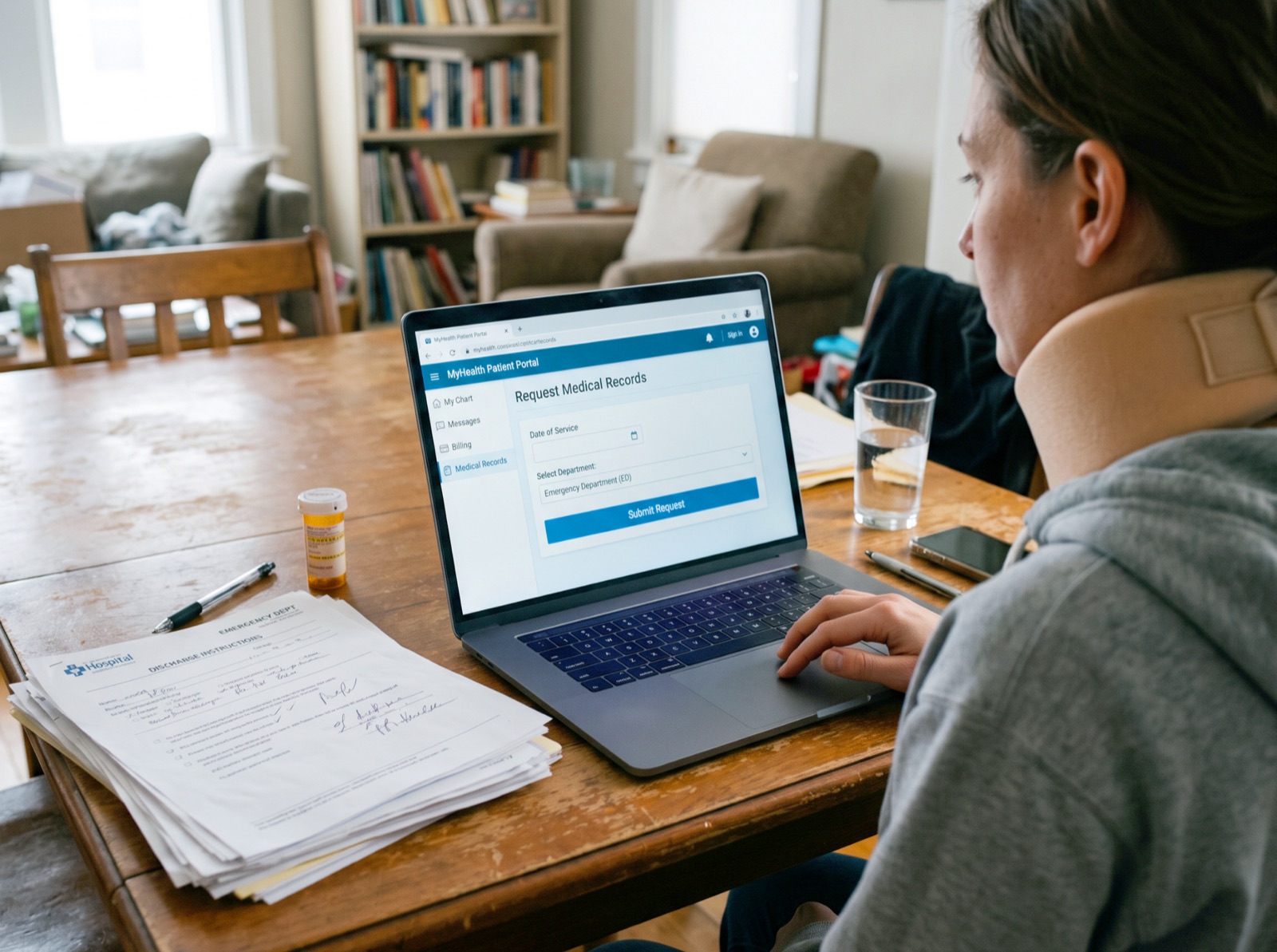
After a car accident, your emergency room (ER) records can help explain what happened to your body and when your symptoms began. They contain details about your injuries, examinations, test results, and treatment.
These records are useful for follow-up care, insurance claims, and personal injury cases. However, the discharge papers you receive when leaving the hospital may not include your complete medical chart.
In California, you can request copies of your ER medical records directly from the hospital. If an attorney handles your injury claim, the legal team can also help coordinate records requests and obtain additional documentation when necessary.
Here's how to request the right records and avoid common delays.
Why Are ER Medical Records Important After a Car Accident?
ER records document your medical condition shortly after a collision. They help establish a timeline of your symptoms and treatment.
These records may contain:
- Arrival Information: When you reached the hospital and when you first reported symptoms.
- Accident Details: Information you provided about the collision, seatbelt use, and airbag deployment.
- Initial Symptoms: Complaints of neck pain, back pain, headaches, dizziness, or numbness.
- Medical Findings: Injuries and symptoms observed during examinations.
- Diagnostic Tests: Results from X-rays, CT scans, blood tests, or other examinations.
- Treatment Instructions: Medications, referrals, and recommended follow-up care.
For personal injury claims, these records help attorneys understand the medical evidence surrounding an accident.
However, medical records alone do not establish who caused the crash. Other evidence may be needed to determine liability.
What ER Medical Records Should You Request?
Asking for your "hospital paperwork" might result in receiving only discharge instructions.
For a more complete record, request the following documents when applicable.
Medical charts and treatment records
- Emergency physician notes
- Triage and nursing notes
- Vital signs and pain assessments
- Medication administration records
- Laboratory test results
- Specialist consultation notes
- Procedure reports
- Discharge instructions
Imaging and additional records
You may also need:
- Radiology reports explaining imaging findings
- Actual X-ray, CT, or MRI images
- Emergency medical services (EMS) reports
- Itemized hospital bills
- Health insurance explanations of benefits
Radiology images may require a separate request through the hospital's imaging department.
Ambulance reports are usually maintained by the ambulance provider or responding fire department. Contact that agency directly if the hospital does not have them.
How to Request ER Medical Records in California
Obtaining your records usually starts with the hospital's medical records department.
Follow these steps to request them.
1. Contact the correct hospital department
Call the facility where you received treatment.
Ask for:
- Health Information Management (HIM)
- Release of Information (ROI)
- Medical Records Department
Confirm whether the hospital accepts requests through its patient portal, an online form, mail, or another approved method.
2. Prepare your information
Before submitting your request, gather:
- Your full legal name
- Date of birth
- Hospital name and location
- Date of your emergency room visit
- Contact information
- Any identification or authorization that the hospital reasonably requires
Providing accurate details helps staff locate the correct hospital encounter.
3. Request the complete ER chart
Be specific about the documents you need.
Instead of requesting only your discharge summary, ask for physician notes, nursing records, test results, medication records, and other available documents from the visit.
You can use this example:
I would like to request a complete copy of my emergency room medical records for my visit on [date]. Please include physician notes, nursing notes, laboratory results, imaging reports, medication records, and discharge paperwork.
Ask whether the hospital can provide the documents electronically.
4. Request medical images separately
If you underwent imaging, contact the radiology department.
Ask whether the facility can provide:
- Digital imaging files
- A secure download
- Copies on an approved storage device
The hospital may release the written radiology report separately from the actual images.
5. Track your request
Keep a copy of your submission and record when it was received.
You can also ask for:
- A confirmation or request number.
- The department's contact information.
- An estimated completion date.
- Instructions for following up.
If documents are missing, identify them when contacting the records department again.
How Long Does It Take to Get ER Medical Records in California?
California law gives patients specific rights to access their medical information. Under California Health and Safety Code Section 123110, healthcare providers generally must:
- Allow eligible patients to inspect their records within five working days after receiving a qualifying request.
- Transmit requested copies within 15 days after receiving a qualifying patient request.
- Provide electronic copies in an available, appropriate format when requested.
- Limit copying charges to applicable legal requirements.
- Avoid withholding records simply because the patient has an unpaid treatment bill.
Certain exceptions and different rules may apply.
The Medical Board of California's guidance on patient records explains these access rights.
If your request remains incomplete, contact the hospital's records department and ask for an explanation.
When Might an Attorney Need a Medical Records Subpoena?
Patients can usually request their own medical records without a subpoena. However, a law firm handling an injury lawsuit may need additional records from hospitals, clinics, or other healthcare providers.
A subpoena is a formal legal process used to obtain evidence in a case.
For medical records, attorneys must consider:
- Authorization Requirements: Determine whether patient authorization or a subpoena is appropriate.
- Healthcare Provider: Identify the facility holding the requested records.
- Records Custodian: Identify the person or department responsible for maintaining the records.
- Privacy Requirements: Follow applicable medical privacy laws and consumer notice rules.
- Proper Service: Ensure the subpoena is served in accordance with California law.
- Records Production: Establish how the requested documents will be provided and documented.
Medical information receives special privacy protections. A subpoena does not automatically authorize unrestricted disclosure.
California law firms can use a professional medical records subpoena service to help coordinate document delivery to healthcare facilities and records custodians.
What If Your ER Records Are Missing or Incomplete?
Missing documents do not always mean the hospital lost them. Sometimes, a records request covers only part of your visit.
Here are common situations and possible solutions:
- You received discharge papers only. Request the complete clinical chart through HIM or ROI.
- Your imaging report is missing. Contact radiology and confirm whether imaging records require separate processing.
- The hospital cannot find your visit. Verify your name, date of birth, treatment date, and hospital location.
- Your request has been delayed. Ask the records department to confirm receipt and explain the delay.
- The chart contains incorrect information. Ask about the hospital's medical record amendment process.
Under HIPAA, patients can request corrections to inaccurate or incomplete information. The U.S. Department of Health and Human Services provides guidance on these rights.
Keep your original records and copies of any correction requests.
How Do ER Records Help With a Personal Injury Claim?
After a car accident, medical records help connect the reported symptoms, examination findings, and treatment to a documented timeline.
A personal injury attorney may review these records alongside other evidence, including:
- Police collision reports
- Photographs of vehicle damage
- Witness statements
- Follow-up medical records
- Medical bills and insurance statements
- Documentation of missed work
Medical records may also help attorneys identify gaps in treatment documentation or determine whether additional healthcare records are necessary.
If you need guidance about an injury claim, a local injury law firm in Sacramento can review the accident circumstances, available medical evidence, and potential legal options.
How Can Legal Teams Organize ER Medical Records?
Managing medical records can become complicated when an injured person receives treatment from multiple facilities.
For example, someone might receive emergency treatment at one hospital, undergo imaging at another, and attend rehabilitation appointments at a third clinic.
Legal teams can simplify records management by:
- Creating a list of healthcare providers and treatment dates.
- Tracking submitted authorizations and records requests.
- Keeping clinical records separate from billing statements.
- Checking whether the requested documents are complete.
- Recording follow-up dates and outstanding items.
- Organizing records in chronological order.
For Sacramento-area legal professionals, records retrieval services can help coordinate document requests, records follow-up, and other litigation support tasks.
Clear documentation helps reduce confusion as a case progresses.
Frequently Asked Questions About ER Medical Records
Can I Request My ER Records Without a Lawyer?
Yes. California patients generally have the right to request their own medical records. You can contact the hospital's records department and follow its request procedures.
Can I Get ER Records if I Still Owe the Hospital Money?
Yes. A healthcare provider generally cannot withhold your medical records because of an unpaid treatment bill. Applicable copying fees may still apply.
Do ER Records Prove That Another Driver Caused My Injuries?
Not by themselves. ER records document medical findings and treatment. Establishing another driver's responsibility may require evidence of a collision and additional medical information.
Can a Process Server Obtain My Medical Records?
A process server can deliver legally authorized subpoenas and related documents. However, serving a subpoena is different from receiving confidential medical records. Healthcare providers must follow applicable privacy and disclosure requirements.
Final Thoughts
Getting your ER medical records after a car accident does not have to be complicated. Start by contacting the hospital's records department, requesting the complete chart, and tracking your submission.
For personal injury cases, accurate medical documentation can help attorneys evaluate injuries and prepare claims.
AtlasServe Legal supports Sacramento-area legal teams with hospital subpoena service, helping attorneys manage formal document delivery and related litigation requirements.